Chapter 1 · Sample
A WARNING TO THE READER
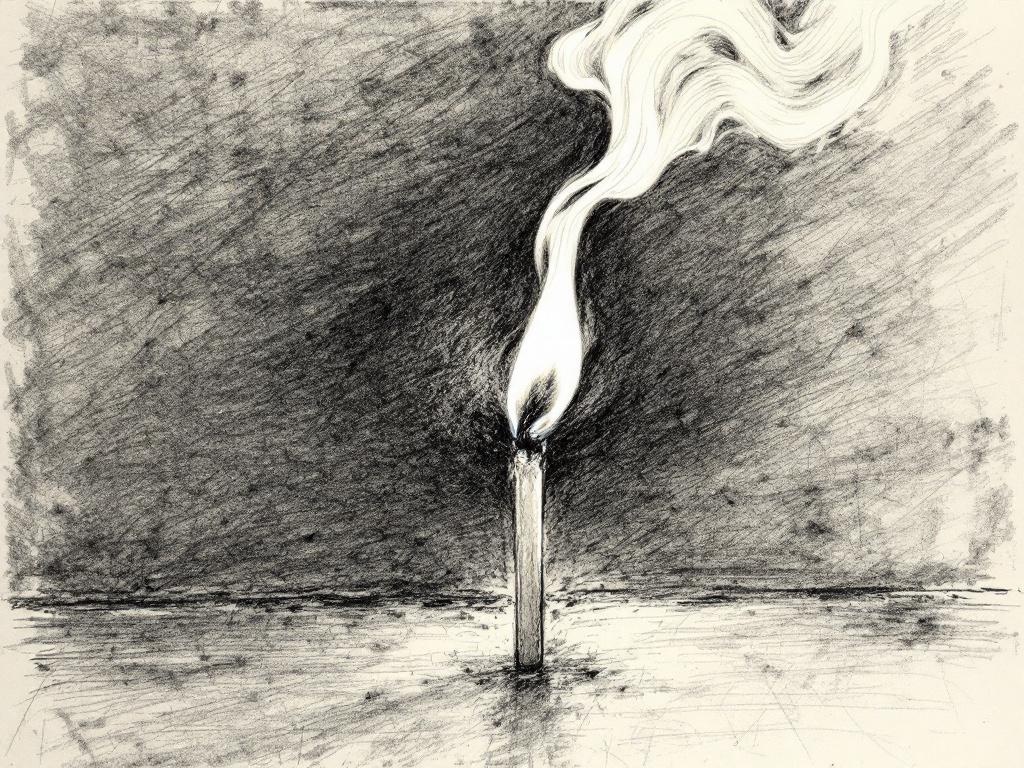
This book contains real stories of human cruelty, violence, and darkness. These stories are not included to shock you. They are included because they are TRUE, and because the only way to prepare for what is coming is to understand what humans are capable of. If you are easily disturbed, proceed with care. But proceed. Because ignorance is not protection — it is a death sentence.
I did not write this book from a library. I wrote it from memory. I grew up in Syria — a country that, for most of my childhood, felt permanent. Schools, families, markets, neighborhoods, the smell of bread from the bakery around the corner at six in the morning. The Syrian city of my childhood was not a war zone. It was an ordinary place where ordinary people lived ordinary lives. My parents worked. My siblings went to school. People argued about traffic and politics and football and the price of tomatoes. None of us believed it would end. That is the first thing I want you to understand: the people who lived through every crisis in this book believed, right up until the moment of rupture, that their world was stable. The Bosnian families who survived the siege of Sarajevo had been living normal city lives — going to cafes, attending university, watching football — the week before the checkpoints appeared. The Puerto Rican families who lost everything to Hurricane Maria had weathered storms before. The Argentines who woke to find their bank accounts frozen had trusted the peso their entire lives. Normal, until it wasn’t. I was a child when the Syrian war began. I was old enough to understand what I was seeing, but not old enough to have prepared for it. I watched the city I knew transform. I watched neighbours leave. I watched buildings become rubble. I watched adults — steady, capable people who had managed everything in their life with competence and grace — become helpless in the face of something they had never planned for. My family was among the fortunate. We survived. We got out. We arrived in Australia — a country of unfamiliar language, unfamiliar seasons, unfamiliar everything — with our lives, our health, and each other. That is more than many can say.
But survival is not the same as recovery. And recovery is not the same as understanding. It has taken me years to move from the first to the third. To sit with what I witnessed. To read the accounts of other survivors — not just from Syria, but from Bosnia, from Rwanda, from Japan, from Argentina, from Puerto Rico, from every p l a c e where or d i n a r y l i f e b e c a m e catastrophe — and recognise the patterns. The warnings that went unheeded. The preparations that could have been made. The plans that were never written because people assumed the window of safety would last forever. I wrote this book because I believe that window matters — and most people don’t know how narrow it is. I am not a soldier. I am not a professional survival instructor or a military strategist. What I am is a person who has lived inside the gap between the world before and the world after. Who has watched people discover, too late, that the systems they depended on — governments, banks, infrastructure, supply chains, civil order — are far more fragile than they appear. I wrote this book for ordinary people. Not survivalists. Not preppers who live in bunkers and spend their weekends practising tactical manoeuvres. I wrote it for parents who love their children and want them to be safe. For people who suspect, on some level, that the world is less stable than they are told. For anyone who has ever felt a quiet unease — reading the news, watching the weather, seeing the headlines — and thought: what would I do if this happened here? This book answers that question. Part by part, story by story, chapter by chapter, it builds the picture of what human darkness looks like — and what human resilience looks like in response to it. And in the final chapter, it hands you the tools to build your own resilience. Not as an abstract concept, but as a concrete, executable, personalised plan. I am not writing to tell you that the world is ending. I genuinely do not know if it is. What I know is that crises are not extraordinary events. They are part of human history — recurring, patterned, predictable in
their general shape even when their specific forms are not. The people who understand this — who build their lives with eyes open to the possibility of disruption — are the people who navigate those disruptions with their families intact. I have lived on both sides of that line. I have been the person who did not know the window would close. I will not be that person again. I hope this book helps you be ready before the window closes. Not from fear. From love. — Nawras Alali Adelaide, Australia, 2026
CONTENTS A Warning to the Reader Author’s Note Chapter 1: THE FIRST BLOOD Chapter 2: THE MONSTER WITHIN Chapter 3: WHEN THE LIGHTS GO OUT Chapter 4: THE INVISIBLE EMPIRE Chapter 5: THE COMING STORM Chapter 6: THE SHIELD Chapter 7: CHOOSE THE LIGHT Chapter 8: THE SURVIVAL BLUEPRINT A Final Word About the Author Resources